How to Cook a Porterhouse Steak with Perfect Char on Both Sides
| This porterhouse steak recipe is for people who don’t want to choose between a strip and a filet. The porterhouse gives you both on the same bone — and Big Daddy cooks it with the same unapologetic aggression every great steak deserves. High heat, heavy char, perfect interior. Here’s exactly how it’s done. |
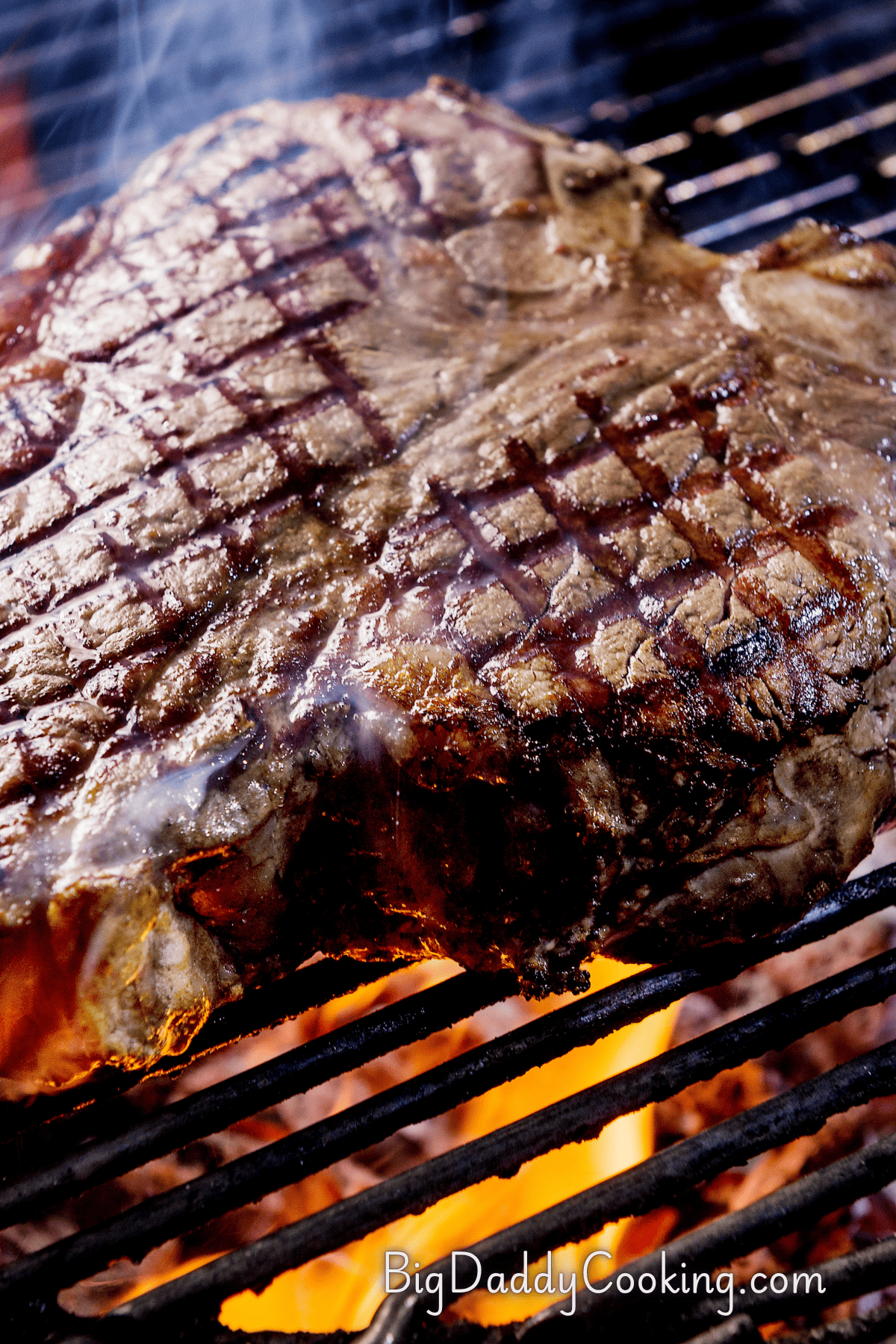
Charred Perfection: The Ultimate Porterhouse Experience
Ingredients
Method
- Instructions
- Remove the steak from the fridge at least 1 hour before cooking to bring to room temperature.
- Pat steak completely dry. Rub with olive oil, then coat evenly with the mixed salt, pepper, paprika, and garlic powder.
- CAST IRON METHOD: Preheat cast-iron skillet over high heat until smoking hot. Add a drizzle of olive oil and sear steak 2–3 minutes per side until a golden-brown crust forms.
- GRILL METHOD: Preheat grill to 500°F (260°C). Sear over direct heat 3 minutes per side, then move to indirect heat.
- Add butter, garlic, rosemary, and thyme to the pan. Tilt and baste steak continuously for 1–2 minutes.
- Transfer cast-iron skillet to a 375°F (190°C) oven and roast 5–8 minutes, OR continue on indirect grill heat 5–8 minutes, until desired doneness.
- Use a meat thermometer: Rare 120°F, Medium-Rare 130°F, Medium 140°F. Remove 5°F before target temperature.
- Transfer to a wooden cutting board, tent loosely with foil, and rest 10–15 minutes.
- Cut along the bone separating the Filet and Strip sides. Slice each against the grain into thick strips.
- Mix butter, garlic, herbs, and lemon zest into compound butter. Place a generous dollop on top of the hot steak and let melt. Finish with a sprinkle of flaky sea salt.
Why This Works
The Porterhouse is two steaks in one, and that’s both its glory and its challenge. The Filet side is leaner and cooks faster; the Strip side has more fat and needs more heat. Starting at room temperature for a full hour is essential — it narrows the temperature gap between the surface and center so the whole steak reaches doneness simultaneously. The butter baste isn’t just flavor: the continuous spooning of hot fat over the steak accelerates surface cooking and creates the deep mahogany crust. Cutting along the bone to separate the two sections before slicing ensures each side gets cut against its own grain direction — they run differently.
What to Serve With This
A steak this size is a centerpiece. Keep sides elegant and minimal: roasted asparagus with lemon butter, creamed spinach, or truffle-salted roasted potatoes. A red wine reduction or a classic béarnaise on the side gives you something to drag each cut through. For wine, a California Cabernet Sauvignon or an Argentinian Malbec has the structure to stand up to this much meat.
Make It Your Own
Cast iron and grill both produce excellent results — cast iron gives a more uniform crust, grill adds smoke. For a pure garlic-butter version, skip the compound butter and just baste continuously with garlic, butter, and rosemary during the last few minutes. The smoked paprika in the seasoning adds a subtle smokiness without a smoker — omit it for a more classic steakhouse profile. A smaller Porterhouse (around 24 oz) works with the same method; just reduce the oven time by 2–3 minutes.
Storage & Leftovers
Leftover Porterhouse is one of the great pleasures of the following day. Slice cold and serve over arugula with shaved Parmesan and a lemon vinaigrette — it’s magnificent. Store wrapped tightly in foil or an airtight container for up to 3 days. Reheat gently in a 275°F oven covered with foil for 10 minutes, then 1 minute in a screaming-hot dry pan to re-crisp the crust. Never microwave a good steak.
You Might Also Love
If you loved this recipe, try these next:
Red Wine Braised Short Ribs
Classic Beer Braised Short Ribs
Want more Big Daddy recipes? Grab your free cookbook