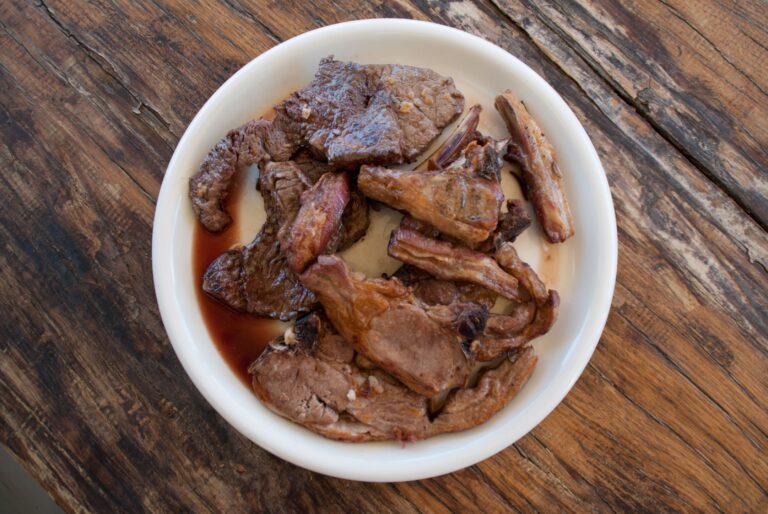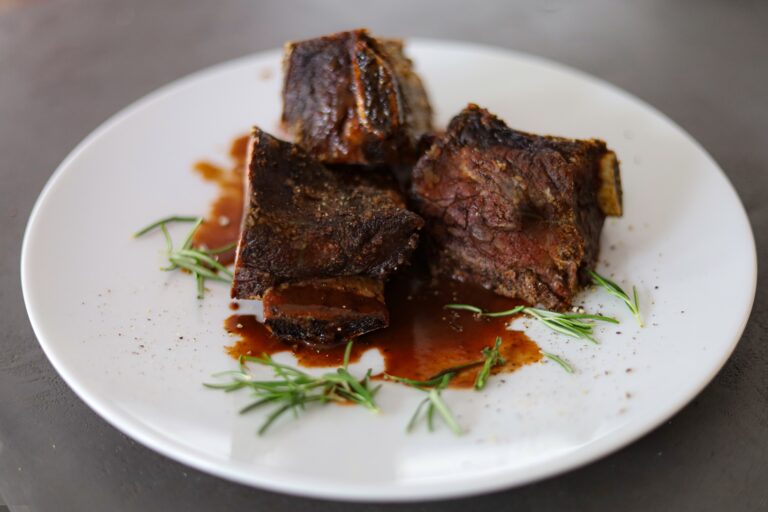
How to Braise Lamb Shanks so They Fall Off the Bone Every Single Time
| This braised lamb shanks recipe is proof that the best things take time. Lamb shanks seared hard to lock in the crust, then braised low and slow with garlic, fresh thyme, and a rich stock until the meat slides clean off the bone. This is the kind of dish that fills the house with a smell that makes everyone ask what’s for dinner two hours before it’s ready. |
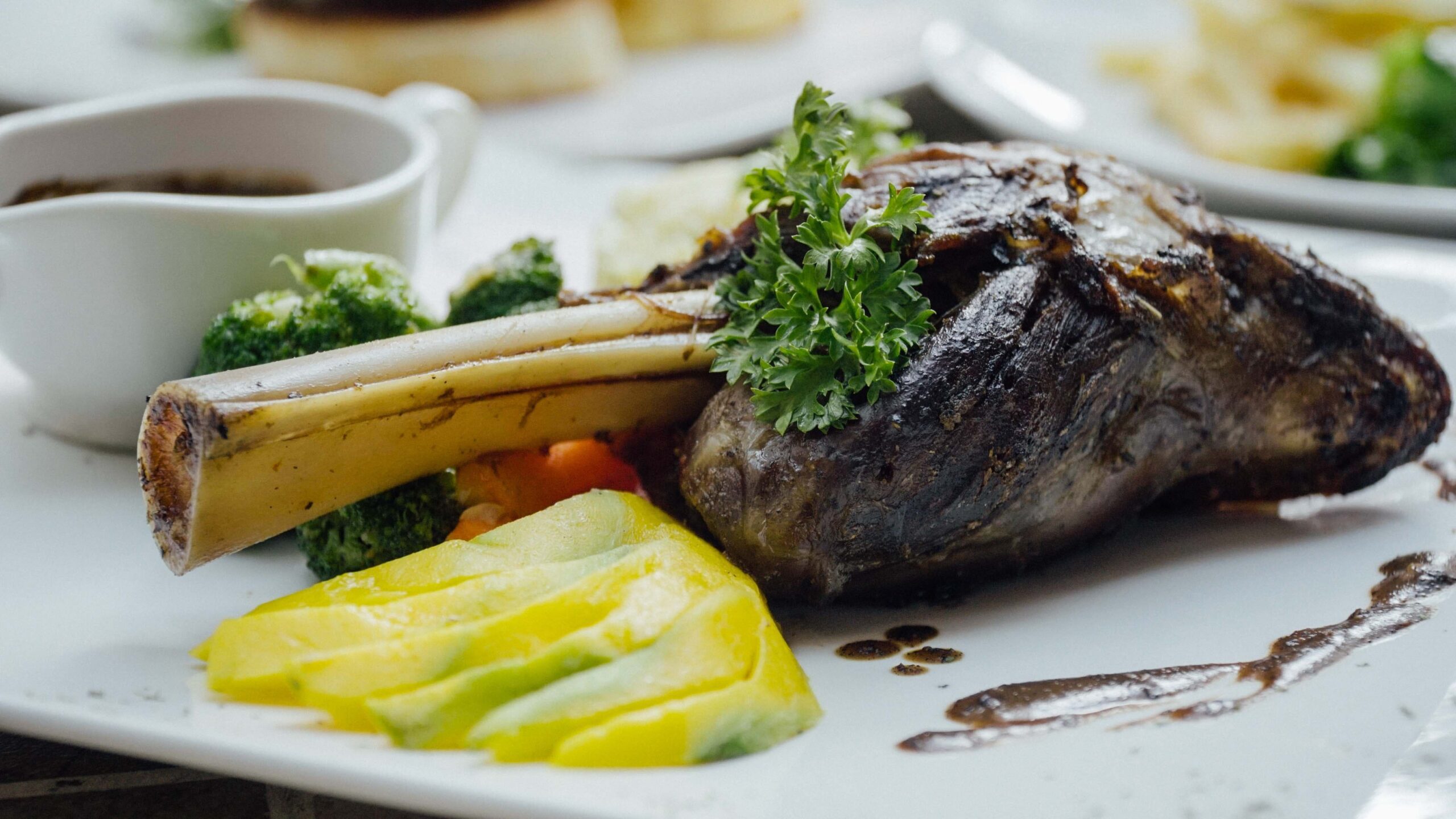
Garlic Thyme Braised Lamb Shanks
Ingredients
Method
- Pat lamb shanks dry and season generously with salt and pepper. Let rest 20 minutes at room temperature.
- Heat olive oil in a large Dutch oven over medium-high heat. Sear lamb on all sides until deep golden brown, 4-5 minutes per side. Remove and set aside.
- Add onions, carrots, and celery to the pot. Sauté until softened, 6-8 minutes. Add garlic and cook 1 minute. Stir in tomato paste and cook 2 more minutes.
- Pour in red wine, scraping up browned bits. Add broth, thyme, bay leaves, and lemon zest. Return lamb to pot. Bring to a simmer, cover tightly, and braise in a 325°F oven for 3-4 hours until fork-tender.
- Remove shanks, strain braising liquid, and simmer until reduced into a rich, glossy sauce.
- Plate shanks over creamy polenta or mashed potatoes. Spoon sauce over meat and garnish with thyme and parsley.
Notes
• Mediterranean Variation: Add olives and sun-dried tomatoes to the braise.
• Spicy Kick: Add red chili flakes to the base vegetables.
• Herbal Twist: Add rosemary or oregano alongside the thyme.
• Wine pairing: Syrah or Cabernet Sauvignon.
Why This Works
Lamb shanks have a high concentration of collagen in their connective tissue — this collagen converts to gelatin during a slow braise at 325°F, which is what creates the silky, fall-off-the-bone result this dish is known for. Rushing the cook at a higher temperature causes the muscle fibers to contract and tighten before the collagen fully converts, resulting in tough, chewy meat rather than tender. Searing the shanks in batches (not crowding the pot) is essential for the same reason as with short ribs — overcrowding drops the temperature and the meat steams rather than sears. The lemon zest added to the braising liquid performs a specific function: it provides brightness that cuts through the gamey richness of lamb and keeps the finished sauce from tasting heavy.
What to Serve With This
Lamb shanks on a bed of creamy polenta is the classic Italian presentation and it’s hard to improve on. Creamy mashed potatoes, white bean puree, or simple buttered egg noodles all work equally well. A gremolata (chopped parsley, lemon zest, and raw garlic) scattered over the top just before serving adds a pop of fresh flavor against the rich braise. For wine, a Syrah or a bold Cabernet Sauvignon with real tannin matches the lamb without being overwhelmed.
Make It Your Own
The recipe calls for red wine, but white wine creates a lighter, more delicate sauce that works beautifully with lamb — try a dry white Burgundy. Chicken broth can substitute for lamb or beef broth. For a Mediterranean variation, add a cup of pitted Kalamata olives and a handful of sun-dried tomatoes to the braising liquid in the last hour. This method also works excellently with beef osso buco (cross-cut beef shank) using the same technique and timing.
Storage & Leftovers
Braised lamb shanks improve significantly overnight as the flavors meld. Store in the braising sauce for up to 4 days refrigerated — the sauce will gel in the fridge and become a natural, rich coating when reheated. Reheat covered at 300°F for 25–30 minutes or gently on the stovetop. These freeze exceptionally well in their sauce for up to 3 months. The leftover braising sauce is outstanding as a pasta sauce with pappardelle.
You Might Also Love
If you loved this recipe, try these next:
Moroccan Spiced Lamb Tagine
Want more Big Daddy recipes? Grab your free cookbook